






 Casa
Casa Prodotti

29+ years in pharmaceutical machinery, covering capsule filling, tablet pressing, blister packaging, tablet and capsule counting, cartoning, GMP production, and overseas machine service.

UN macchina conta-compresse Sembra una stazione semplice su una linea di confezionamento: solidi in entrata, numeri in uscita, bottiglie riempite. Nelle fabbriche reali, il "conteggio" è una catena: separazione dei singoli pezzi, rilevamento pulito, temporizzazione delle bottiglie e scarti affidabili. Se compresse o capsule arrivano sovrapposte, scoppiano a causa dell'elettricità statica o cadono in una bottiglia leggermente fuori posizione, si verificano ricontrolli e fuoriuscite che vengono attribuite al "sensore". Questo articolo è scritto per i team di produzione che costruiscono o aggiornano un linea di imbottigliamento delle compresse e per i principianti che desiderano avere delle nozioni di base chiare prima di rivolgersi ai fornitori.
Su una linea di produzione, il contatore è una stazione di alimentazione e verifica controllata. Deve trasformare i solidi sfusi in un flusso ripetibile, uno alla volta, e poi sincronizzare tale flusso con l'indicizzazione delle bottiglie in modo che ogni bottiglia riceva il conteggio previsto senza errori. Ecco perché un'unità può sembrare perfetta durante una breve dimostrazione, ma avere problemi dopo due ore di utilizzo di compresse polverose, frequenti arresti e riavvii o contropressione a valle da parte di una tappatrice.
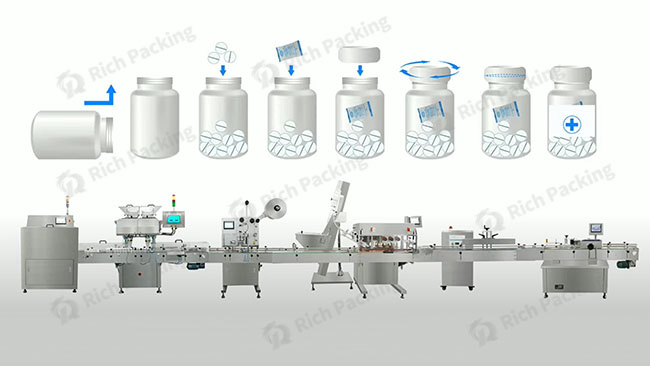
La maggior parte degli impianti segue una variante dello stesso flusso: le bottiglie arrivano e vengono indicizzate sotto lo scivolo di scarico; il contatore rilascia la quantità prestabilita; i moduli a valle tappano, sigillano, etichettano e codificano. Ciò che conta di più è come si comporta la macchina conta-compresse quando la linea non è "perfetta": quando i nastri trasportatori si fermano, quando le bottiglie non sono uniformi e quando gli operatori devono pulire rapidamente e riprendere il lavoro senza ricalibrare.
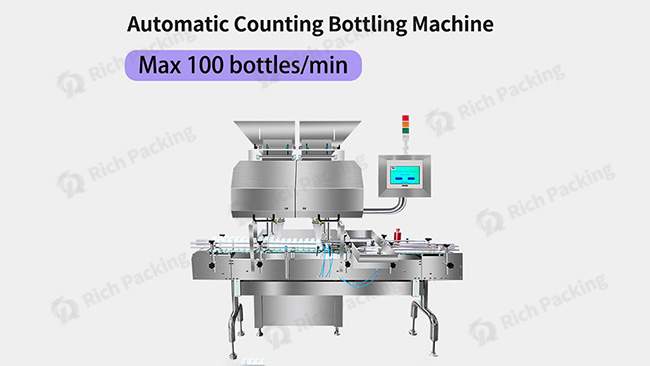
I cataloghi possono elencare decine di tipi di macchine conta-compresse, ma tre distinzioni pratiche permettono di prevedere quale sarà la più adatta al vostro impianto: la posizione dell'unità, il metodo di conteggio e la complessità del prodotto.
Innanzitutto, valutiamo la differenza tra contatori da banco e contatori per linee di produzione. I contatori da banco sono generalmente utilizzati per piccoli lotti, campionamenti per il controllo qualità o flussi di lavoro semplici in cui gli operatori posizionano i contenitori manualmente. I contatori per linee di produzione sono progettati per nastri trasportatori, sensori per bottiglie, logica "nessuna bottiglia, nessuna caduta" e un comportamento di avvio/arresto preciso ad alta velocità.
Il secondo aspetto riguarda il rilevamento: fotoelettrico o a visione artificiale. Una macchina conta-compresse fotoelettrica rileva ogni compressa quando interrompe un fascio luminoso sulla finestra di rilevamento ed è spesso la soluzione più conveniente quando il flusso di lavoro è pulito e i prodotti non presentano particolari difficoltà ottiche. I sistemi a visione artificiale utilizzano telecamere e processori per interpretare gli oggetti; questo risulta particolarmente utile per capsule trasparenti, rivestimenti lucidi o prodotti soggetti a frammentazione. Questi sistemi vengono commercializzati come macchine conta-compresse a visione artificiale e alcuni modelli combinano illuminazione controllata, schermatura e filtri software per ridurre i falsi allarmi dovuti ai riflessi. Quando si confronta una macchina conta-compresse a visione artificiale con una fotoelettrica, la domanda più importante è se il prodotto e l'ambiente di lavoro richiedano effettivamente questa maggiore capacità di discriminazione.
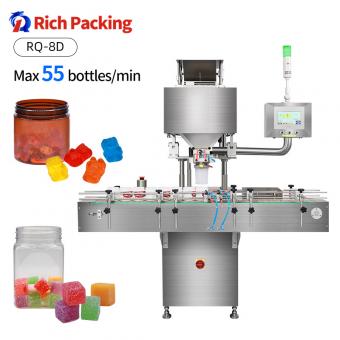
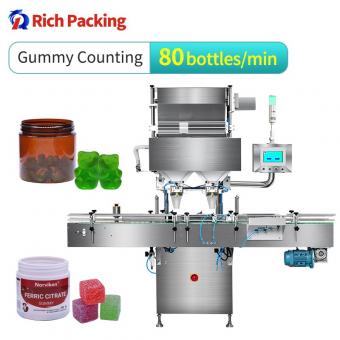
Il terzo è la difficoltà del prodotto. Un tablet standard e macchina conta capsule può essere eccellente per compresse e capsule rigide, ma le caramelle gommose e le capsule molli si comportano in modo diverso. macchina conta caramelle gommose oppure una macchina contacapsule softgel di solito richiede una manipolazione più delicata e misure antiaderenti; altrimenti il problema del "conteggio" è in realtà un problema di alimentazione e adesione.
In linea generale, il principio di funzionamento è semplice: creare un flusso di pezzi singoli, contare con precisione e far cadere i pezzi in modo pulito in una bottiglia posizionata correttamente.
Il prodotto inizia in una tramoggia e si sposta su pannelli o binari vibranti che distribuiscono le compresse in corsie. Questa fase di separazione è fondamentale per la stabilità: l'obiettivo è una spaziatura uniforme, non vibrazioni eccessive. I pezzi passano quindi attraverso guide e valvole che ne condizionano il flusso. Le capsule richiedono particolare attenzione alla rotazione e all'adesione dovuta all'elettricità statica. Dopo il condizionamento, i pezzi attraversano la finestra di rilevamento dove il sistema incrementa il conteggio.
Le bottiglie vengono indicizzate sotto lo scivolo di scarico e il contatore rilascia il prodotto solo quando una bottiglia è presente e la tempistica è corretta. La verifica e lo scarto completano il ciclo: a seconda della linea, è possibile utilizzare il controllo del peso, l'ispezione visiva o controlli basati sulla logica, ma il requisito pratico è lo stesso: le bottiglie non conformi devono essere scartate in modo affidabile.
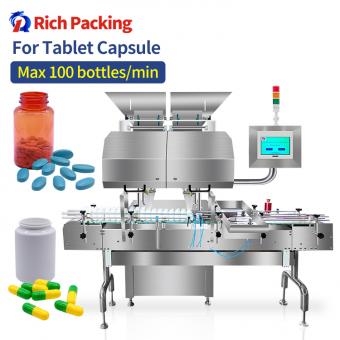
In molte linee, il “sistema” è più ampio del contatore stesso. Un segmento di una macchina conta-riempitrice di compresse può includere l’alimentazione e l’indicizzazione delle bottiglie, la testa di conteggio e le interfacce per i moduli a valle. Nel linguaggio dell’impianto, si tratta di apparecchiature conta-compresse progettate per funzionare come parte di un linea di conteggio delle compresse , non come strumento da banco isolato.
Spesso i team iniziano regolando le soglie, ma la precisione viene solitamente determinata a monte, in termini di separazione e ambiente. Polvere e frammenti causano la deriva. La polvere ricopre le finestre di rilevamento e modifica lentamente i segnali; i frammenti possono essere interpretati come pezzi interi in presenza di sovrapposizione. L'involucro e l'accesso sono fattori che influenzano la precisione, poiché determinano se la pulizia viene effettivamente effettuata con sufficiente frequenza per prevenire il degrado delle prestazioni durante il turno.
L'elettricità statica è la classica causa nascosta nelle applicazioni con capsule. Quando il conteggio delle capsule sembra "casuale", spesso la causa è l'elettricità statica: le capsule aderiscono alle guide e poi si rilasciano improvvisamente, creando doppi conteggi. Se l'impianto è asciutto, è opportuno considerare il controllo dell'elettricità statica come parte integrante delle specifiche per il conteggio delle capsule (messa a terra, livelli di umidità target e ionizzazione), piuttosto che dover ricorrere a continue regolazioni del sensore.
La tempistica è l'altra metà della precisione. Il centraggio delle bottiglie, il tempo di permanenza sotto lo scivolo e il comportamento di avvio/arresto determinano se un conteggio accurato si traduce in un riempimento pulito. Se le bottiglie non sono posizionate correttamente, si può contare correttamente e comunque rovesciare il contenuto, costringendo a cercare un problema che in realtà non riguarda il conteggio.
La ripetibilità durante il cambio formato è un altro fattore chiave. Un sistema di archiviazione dati che memorizza oltre 20 gruppi basati sulle variazioni dei parametri del materiale consente agli operatori di richiamare impostazioni collaudate senza dover reimpostare i parametri. Ciò riduce gli errori umani, semplifica le operazioni per gli impianti multi-SKU e contribuisce a riportare la linea a prestazioni stabili più rapidamente dopo la pulizia o i cambi di prodotto.
Un altro dettaglio pratico che spesso distingue il "funzionamento in teoria" dal "funzionamento sul campo" è il modulo di alimentazione. Rich Packing utilizza un design con pannelli antivibranti chiusi, un meccanismo di bloccaggio automatico del cilindro e una struttura completamente chiusa per impedire l'ingresso di polvere nell'unità principale e mantenere un allineamento costante. Il PLC supporta lo smontaggio con un solo tocco e una struttura a incastro integrata aiuta gli operatori a pulire e rimontare rapidamente, aspetto importante perché la lentezza nell'accesso è una delle cause più comuni di deriva e micro-arresti imprevisti.
Per risolvere rapidamente i problemi, è necessario analizzare tre domande distinte: il flusso è monoblocco? Il segnale di rilevamento è pulito? La temporizzazione della bottiglia è corretta? Se la separazione è instabile, qualsiasi sensore può guastarsi. Se il flusso è pulito, la maggior parte degli errori di conteggio deriva dalla temporizzazione, dalla logica di presenza della bottiglia o dal comportamento di avvio/arresto.
|
Sintomo |
Causa più probabile |
Controllo e riparazione rapidi |
soluzione a lungo termine |
|
Sovrastime che vanno e vengono |
Sovrapposizione/rimbalzo; rilascio statico a raffica; frammenti |
Ridurre le vibrazioni/la velocità della corsia, pulire il finestrino, verificare l'ionizzazione/la messa a terra |
Migliorare la geometria della singolarizzazione, il piano statico formale, considerare la visione per prodotti ricchi di frammenti |
|
Sottostima dei valori a velocità più elevate |
Ombreggiature dovute alla sovrapposizione; contaminazione della finestra |
Alimentazione lenta, aumento della spaziatura, pulizia della finestra di rilevamento |
Migliorare la manutenzione delle corsie, l'aspirazione della polvere, mantenere le ricette per prodotto |
|
Deriva dopo 1-3 ore |
Accumulo di polvere; accesso lento, quindi la pulizia viene saltata |
Pulizia rapida di finestre e zone antipolvere |
Alimentazione in ambiente chiuso, accesso senza attrezzi ove possibile, intervalli di prevenzione |
|
Ingorghi all'ingresso della corsia |
Variazioni del prodotto; disallineamento della guida |
Riallineare le guide, ispezionare il lotto di compresse |
Definire i limiti del prodotto, ottimizzare la geometria della pista |
|
Si rovescia nella macchina |
Centratura della bottiglia; ritardo dello scivolo/temporizzazione |
Ricentrare le bottiglie, controllare i sensori di presenza bottiglia |
Migliorare l'indicizzazione e la temporizzazione, calibrare la logica "no-bottle-no-drop". |
|
Conteggi corretti ma elevato numero di scarti |
Arresto/avvio causano cali parziali; temporizzazione di rifiuto |
Verifica il comportamento di pausa/ripresa e rifiuta il ritardo |
Controlli coordinati, convalida del rifiuto in caso di interruzioni |
Un'abitudine pratica è quella di fare un breve "controllo del flusso" prima di modificare le impostazioni del sensore. Se si notano sovrapposizioni, pezzi che si toccano o improvvisi picchi di flusso, è necessario prima regolare l'alimentazione e la pressione statica. Solo dopo che il flusso è effettivamente continuo, un pezzo alla volta, si può procedere alla regolazione del sensore e quindi verificare la temporizzazione del biberon.

La facilità di pulizia non è solo una questione di conformità, ma di prestazioni. Quando l'accesso è lento, gli operatori rimandano la pulizia, la polvere si accumula e si formano residui a metà turno. Un accesso rapido trasforma la pulizia in una routine che viene effettivamente eseguita e protegge la produttività.
Il cambio formato è fondamentale per gli impianti stabili. Se si gestiscono molti prodotti, è essenziale che l'allineamento delle corsie ritorni sempre nella stessa posizione e che le ricette mantengano gli stessi parametri. L'accesso senza attrezzi, lo smontaggio con un solo tocco e i gruppi di parametri ripetibili riducono i tentativi ed errori e aiutano i team a ripristinare rapidamente un flusso di lavoro stabile.
Come scegliere una macchina conta-compresse per una linea di imbottigliamento
Iniziate definendo il mix di prodotti e la modalità di produzione, quindi selezionate il sistema di rilevamento e la profondità di integrazione. Se la maggior parte dei vostri prodotti è opaca e scorre senza intoppi, il conteggio fotoelettrico può essere la soluzione ideale. Se invece utilizzate capsule trasparenti o i vostri prodotti generano frammenti, il conteggio visivo può ridurre i controlli ripetuti e gli arresti involontari. Effettuate dei test con i vostri prodotti, alla vostra velocità, per un periodo di tempo sufficiente a rilevare eventuali derive.
Successivamente, decidete quanto deve essere integrato il vostro sistema. Se avete bisogno di una produzione continua con una gestione manuale minima, una macchina conta-compresse automatica progettata per il funzionamento su nastro trasportatore è solitamente il punto di partenza ideale. Una macchina conta-compresse autonoma può essere adatta per basse portate. Se invece avete bisogno di integrazione con il nastro trasportatore e di una produzione continua, vi serve una macchina che gestisca il rilevamento della presenza delle bottiglie, il comportamento di avvio/arresto e gli scarti affidabili. Se il vostro progetto prevede un segmento di macchina all'interno di una linea di conteggio delle compresse, verificate il comportamento del contatore quando la tappatrice o l'etichettatrice si ferma, poiché sono proprio queste pause a evidenziare eventuali problemi di temporizzazione e controllo dello stato.
Nei preventivi e nelle specifiche tecniche si possono inoltre trovare termini specialistici. Una macchina contacapsule può riferirsi a un sistema ottimizzato per il flusso delle capsule e il comportamento statico. Una macchina contacompresse ottica solitamente privilegia l'illuminazione controllata e finestre di rilevamento stabili. Un contatore elettronico di compresse viene spesso utilizzato quando si dà maggiore importanza alla logica di controllo, alle ricette e alla gestione dei guasti, piuttosto che al solo metodo di rilevamento.
Infine, scegliete partner che garantiscano un funzionamento a lungo termine. Il produttore o il fornitore della vostra macchina per l'imbottigliamento di compresse dovrebbe essere trasparente in merito alla manutenzione preventiva, ai componenti soggetti a usura, all'accesso per la pulizia e alle modalità di verifica delle prestazioni dopo l'installazione.
Test di accettazione che gli acquirenti possono copiare
Brevi dimostrazioni nascondono i problemi che emergono in produzione. Un semplice piano di collaudo riduce al minimo le sorprese.
Un test di deriva a lungo termine dimostra la stabilità. Utilizza il tuo prodotto normale per due o quattro ore alla velocità target e verifica che i conteggi rimangano costanti senza interventi eccessivi.
Un test di commutazione dimostra la ripetibilità. Eseguire il Prodotto A, passare al Prodotto B, quindi tornare al Prodotto A e confermare che i conteggi stabili restituiscano rapidamente i valori utilizzando le ricette memorizzate.
Un test di arresto/avvio e contropressione rispecchia le condizioni reali. Indurre pause controllate a valle e verificare che il contatore si fermi correttamente, riprenda senza scaricare il prodotto e non perda il suo stato di conteggio interno.
Un test di verifica degli scarti protegge la qualità. Simula condizioni di riempimento insufficiente/eccessivo e verifica che gli scarti vengano rimossi in modo coerente dalle bottiglie corrette.
Ho bisogno della vista per le capsule?
Non sempre. Molte applicazioni di macchine contacapsule funzionano bene con il rilevamento fotoelettrico se il flusso è pulito e l'elettricità statica è controllata. La visione è utile quando la trasparenza e i riflessi creano falsi allarmi.
Perché gli errori di conteggio compaiono dopo alcune ore?
L'accumulo di polvere e le variazioni graduali del flusso sono cause comuni. Se l'accesso per la pulizia è lento, le operazioni di routine vengono rimandate e la dispersione di polvere si verifica a metà turno.
Un singolo sistema può gestire in modo affidabile sia compresse che capsule?
Sì, ma maggiore è la differenza tra i vostri prodotti in termini di polvere, forma, trasparenza e risposta statica, maggiori saranno i vantaggi derivanti da ricette ripetibili e test di validazione realistici.
È possibile utilizzare lo stesso contatore sia per le caramelle gommose che per le capsule molli?
A volte, ma molti progetti con caramelle gommose e capsule molli richiedono una manipolazione specifica per evitare che si attacchino e si deformino. Verificate la compatibilità con il vostro prodotto specifico.
· Risorse della FDA statunitense sulle attuali aspettative in materia di buone pratiche di fabbricazione (cGMP) per i prodotti farmaceutici finiti
• Linee guida ISPE comunemente utilizzate per la messa in servizio e la qualificazione (approcci IQ/OQ/PQ)
• Principi ICH Q9 per la gestione della qualità basata sul rischio e la pianificazione della convalida
• Principi fondamentali di automazione industriale per il rilevamento fotoelettrico e l'ispezione tramite visione artificiale
· Riferimenti di ingegneria delle linee di confezionamento relativi al bilanciamento della linea, al buffering e alla misurazione dell'OEE.

29+ years in pharmaceutical machinery, covering capsule filling, tablet pressing, blister packaging, tablet and capsule counting, cartoning, GMP production, and overseas machine service.

E-mail : manager@richpacking.cn
Building D, No. 226, Beishan Qiaotou Street, Haizhu District, Guangzhou City, Guangdong Province, China


 Rete IPv6 supportata