






 Casa
Casa Prodotti
29+ years in pharmaceutical machinery, covering capsule filling, tablet pressing, blister packaging, tablet and capsule counting, cartoning, GMP production, and overseas machine service.

I formati monodose sono ovunque: caffè, polveri elettrolitiche, collagene, probiotici, salse, campioni di shampoo e molti prodotti nutraceutici e farmaceutici. Tuttavia, termini come "bustina", "sacchetto" e "stick pack" vengono spesso usati in modo improprio, per cui i team scelgono un formato basandosi prima sull'aspetto e solo in seguito scoprono i limiti imposti: perdite di sigillatura, grinze, peso delle porzioni instabile o obiettivi di produzione irraggiungibili senza una costante messa a punto della linea. Questo articolo chiarisce le differenze e offre un metodo pratico per scegliere un formato efficace nella produzione reale.
Un utile punto di partenza è rappresentato dagli imballaggi flessibili: confezioni realizzate con materiali flessibili (spesso carta, pellicola di plastica, fogli di alluminio o combinazioni di questi) che possono cambiare forma una volta riempite e che comunemente includono sacchetti, buste, rotoli, involucri e formati simili. All'interno di questa categoria, i tre termini presenti in questo titolo non si collocano allo stesso livello.
Le confezioni in bustina sono da considerarsi una categoria di "casi d'uso": piccole confezioni, solitamente monodose, piatte, facili da aprire e semplici da distribuire in cartoni o espositori. Una bustina può avere una sigillatura su 3 lati, su 4 lati o una sigillatura posteriore, a seconda di come viene formata e sigillata. Le confezioni a busta sono più varie: possono essere buste piatte, buste stand-up, buste con cerniera, buste con beccuccio e molte altre strutture, spesso scelte per volumi maggiori, visibilità sugli scaffali e migliori caratteristiche di erogazione o richiusura.
Una confezione stick pack è un tipo di confezione specifica, stretta e allungata, solitamente una bustina monodose, progettata per la portabilità e per un versamento controllato. Nell'uso quotidiano, molti team usano il termine "bustina" come sinonimo di piccole confezioni monodose, quindi spesso sentirete anche le stick pack descritte come bustine.
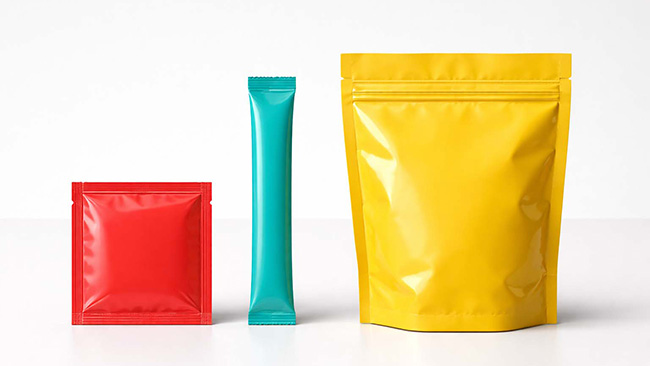
confezione in bustina
La maggior parte dei dibattiti si risolve facilmente una volta che ci si concentra sul comportamento del prodotto al momento del riempimento e della sigillatura. Polveri, liquidi e granuli presentano rischi molto diversi.
Spesso, la tipologia di polvere determina il formato di confezionamento. Le polveri fini possono essere polverose, soggette a carica statica, igroscopiche o inclini alla formazione di grumi, con conseguenti ripercussioni sulla stabilità del dosaggio e sulla pulizia della chiusura. Una bustina piatta rappresenta una soluzione semplice e familiare per le polveri, quando il contenuto viene versato in una tazza o miscelato direttamente. Le bustine monodose diventano più attraenti quando l'utente necessita di un versamento controllato in un'apertura stretta della bottiglia o quando il marchio desidera offrire un'esperienza di consumo premium con un "rituale monodose". Per l'utilizzo in confezioni multiple, le bustine monodose sono spesso la scelta migliore, poiché una confezione più grande può sostituire numerose unità monodose.
Liquidi e gel sono generalmente limitati dalla contaminazione della zona di sigillatura. Uno sciroppo appiccicoso, un siero cosmetico o un liquido schiumogeno possono infiltrarsi nella zona di sigillatura e creare microcanali che sembrano sigillati ma che perdono dopo il trasporto. I liquidi possono comunque funzionare bene in bustine o stick pack, ma il formato deve essere scelto insieme al metodo di riempimento (tipo di pompa, sistema antigoccia) e a un tipo di sigillatura che resista al comportamento reale del prodotto. Se il volume è maggiore o l'utente necessita di un'erogazione più pulita, le bustine con una geometria di apertura migliore, o anche i beccucci, possono ridurre i reclami e il rischio di perdite.
I granuli possono sembrare facili da gestire, ma spesso causano difetti "nascosti": rimbalzi nell'area di sigillatura, segregazione nella tramoggia o scheggiature che creano particelle fini che si comportano come polvere. Se i granuli devono rimanere intatti, è fondamentale dare priorità a un formato e a un processo che mantengano pulita l'area di sigillatura e riducano al minimo l'impatto del riempimento, anche se ciò comporta un consumo di materiale leggermente superiore.
Due formati possono proteggere un prodotto in modo ugualmente efficace, pur offrendo al cliente un'esperienza completamente diversa. Le bustine monodose sono ideali quando il controllo delle porzioni e il versamento preciso sono fondamentali: integratori in bottiglia, preparati per bevande da portare con sé o campioni omaggio in cui la praticità è un fattore importante. Inoltre, conferiscono un aspetto "premium" grazie alla loro forma allungata e stretta, che suggerisce un dosaggio mirato piuttosto che "una semplice bustina".
Le bustine piatte sono popolari perché familiari, facili da assemblare e adatte alla stampa. Le buste offrono un'esperienza d'uso diversa: vengono spesso scelte per conservare e dosare il prodotto, non solo per un singolo momento di apertura e versamento. Se si cerca un packaging che abbia un forte impatto sullo scaffale, che sia pratico da richiudere o che contenga porzioni più grandi, le buste sono solitamente la soluzione più naturale.
Molti problemi di prestazioni sono in realtà problemi di struttura della tenuta. Le strutture comuni di cui si parlerà sono: Sigillatura su 3 lati, sigillatura su 4 lati , E sigillo posteriore Tipi. In parole semplici, le buste a 3 saldature laterali hanno tre bordi saldati e un bordo utilizzato per il riempimento prima della sigillatura finale; le buste a 4 saldature laterali sono sigillate su tutti e quattro i lati; le buste a sigillatura posteriore hanno una saldatura longitudinale sul retro.
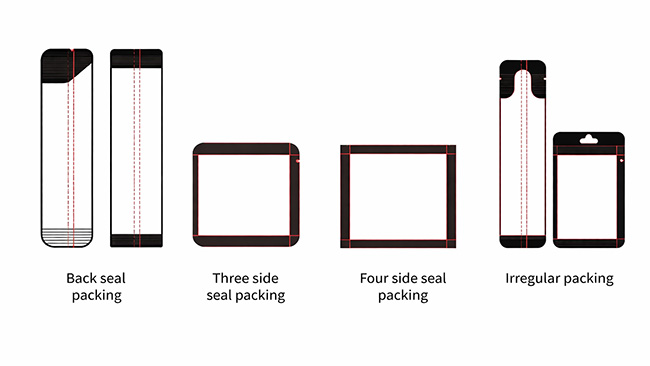
Invece di memorizzare le definizioni, pensate ai risultati. La struttura della sigillatura influenza la tolleranza della "finestra di riempimento" (quanto facilmente si può impedire al prodotto di entrare nell'area di sigillatura), la facilità con cui la confezione si strappa e si rovescia, e la sua sensibilità alle pieghe ad alta velocità. Ecco perché la scelta del formato non è solo una questione di branding: il metodo di sigillatura modifica il profilo dei difetti e l'intervallo operativo stabile.
La scelta della pellicola è il punto d'incontro tra durata di conservazione e producibilità. Le strutture di imballaggio flessibile sono spesso multistrato, consentendo di combinare stampabilità, rigidità, prestazioni di barriera e uno strato sigillante che garantisca una chiusura affidabile. Per un'ampia gamma di formati, due aspetti pratici contano più di un lungo elenco di nomi di resine.
Innanzitutto, le prestazioni di barriera possono variare con l'esposizione all'umidità. L'EVOH è ampiamente utilizzato come barriera all'ossigeno, ma è igroscopico e perde gran parte del suo vantaggio di barriera quando è bagnato, a meno che non sia protetto all'interno di una struttura multistrato. Se il prodotto o la catena di approvvigionamento sono umidi, le "specifiche di barriera" devono essere interpretate nell'ambiente reale, non solo in condizioni ideali.

struttura del film multistrato
In secondo luogo, la rigidità e l'attrito della pellicola influiscono sulla maneggevolezza del nastro. I formati stretti, soprattutto le buste a stick, mostrano prima problemi di tracciamento e grinze perché hanno meno larghezza per assorbire piccole variazioni di tensione. Una pellicola adatta a una busta più larga potrebbe essere troppo morbida o troppo "aggressiva" per le buste strette ad alta velocità, il che spinge a migliorare il controllo della guida/registrazione del nastro o a utilizzare una struttura della pellicola più adatta.
La maggior parte delle confezioni monodose in bustina e stick pack sono realizzate su un macchina per il confezionamento di bustine Utilizzando pellicola in bobina, il processo prevede la formazione, il riempimento, la sigillatura e il taglio in un ciclo ripetitivo. Nei sistemi verticali di formatura/riempimento/sigillatura, la pellicola viene stesa su un collare di formatura a formare un tubo, il prodotto viene riempito, vengono effettuate le sigillature e il tubo viene tagliato in singole confezioni; di solito, la sigillatura superiore di una confezione diventa la sigillatura inferiore della successiva.
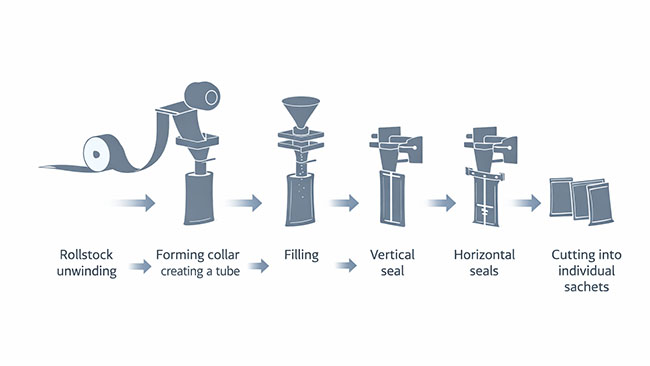
Diagramma passo passo del processo di formatura, riempimento e sigillatura verticale
Per scegliere un formato, concentratevi su ciò che ogni fase "richiede". La gestione del nastro garantisce stabilità (tensione, tracciamento, registro). Il riempimento deve impedire che il prodotto entri nell'area di saldatura (soprattutto polveri e liquidi appiccicosi). La saldatura deve avvenire all'interno di una finestra di termosaldatura affidabile per la pellicola, con pressione e tempo di permanenza adeguati. Il taglio e il registro devono rimanere sincronizzati per evitare di tagliare troppo vicino alle saldature o disallineare la grafica. Quando si scala l'output con più corsie, si moltiplicano questi controlli su più corsie, il che è potente, ma meno tollerante in caso di deriva di una corsia.
Le buste seguono una logica leggermente diversa e in pratica vengono realizzate in due modi principali. Gli imballaggi in busta possono essere prodotti in due modi comuni. Per le buste preformate (spesso realizzate su un macchina confezionatrice per buste preassemblate In genere, la linea preleva una busta finita, la apre, la riempie con il prodotto e la sigilla: questo è comune per le buste stand-up, le buste con cerniera e le buste con beccuccio, poiché le caratteristiche della busta sono già integrate. Per le buste formate, riempite e sigillate, la macchina forma la busta da una pellicola in bobina, quindi la riempie e la sigilla in linea. Rispetto al confezionamento in bustine e stick pack, le buste aggiungono ulteriori fasi di manipolazione (prelievo, apertura, mantenimento della busta e, a volte, integrità della cerniera/beccuccio), quindi l'affidabilità dipende spesso più dal controllo della manipolazione della busta e dalla coerenza dell'adattamento/sigillatura della cerniera che dal semplice tracciamento del nastro.
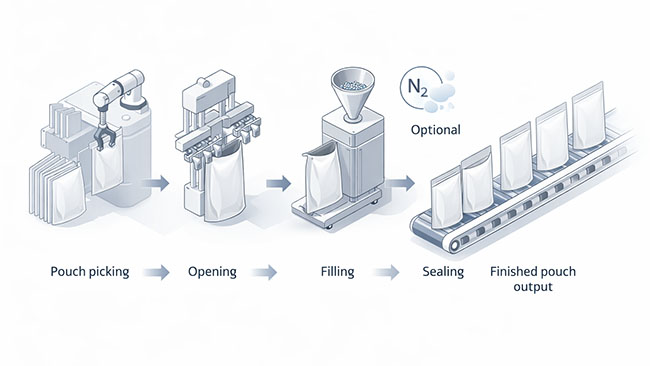
Diagramma di flusso della macchina per il confezionamento di buste preassemblate
Il costo unitario del film rappresenta solo una parte del costo totale. Nelle linee di produzione reali, le voci di spesa più consistenti sono gli sprechi, i tempi di inattività e le rilavorazioni. Le bustine monodose spesso si impilano e si spediscono in modo efficiente e si integrano perfettamente nell'imballaggio secondario. Le confezioni a stick possono essere efficienti in termini di materiale per porzione e migliorare l'esperienza dell'utente, ma possono richiedere una gestione più precisa del nastro e un'uniformità di sigillatura più elevata ad alti volumi di produzione. Le buste multidose spesso utilizzano più materiale per unità, tuttavia possono ridurre il numero totale di operazioni di confezionamento se una busta multidose sostituisce molte confezioni monodose e possono migliorare la soddisfazione del consumatore grazie alla richiudibilità e al dosaggio.
In parole semplici, le confezioni in bustina e stick pack si concentrano sulla praticità del consumo monodose e sul controllo delle porzioni; le bustine monodose sono più adatte per la conservazione, la presentazione e l'erogazione. L'opzione migliore è quella che riduce al minimo la modalità di difetto più probabile per il tuo prodotto al livello di produzione desiderato.
Se la produttività è il fattore determinante, la questione diventa se aumentare la velocità di una singola corsia o moltiplicarne il numero per mantenere una capacità stabile di porzioni al minuto.
Le confezionatrici multicanale per stick pack sono la soluzione ideale quando la tua attività si basa su un elevato numero di porzioni al minuto: preparati per bevande, integratori in polvere, probiotici, dolcificanti e prodotti simili venduti su larga scala. Le corsie parallele moltiplicano la produzione senza costringere una singola corsia a una velocità instabile, ma la condizione fondamentale per il successo è l'uniformità: ogni corsia deve dosare, sigillare e mantenere l'allineamento in modo costante.
A Confezione ricca I progetti di stick pack che procedono senza intoppi sono quelli in cui le dimensioni della confezione, la produzione target (porzioni/minuto), il comportamento del prodotto (flusso, polvere, viscosità) e la struttura del film vengono definiti in anticipo, e la stabilità della sigillatura e del dosaggio viene verificata a velocità simili a quelle della produzione prima di definire gli stampi e il numero di corsie. Questo approccio mantiene i vantaggi degli stick pack, ovvero velocità ed esperienza utente, senza ereditare tassi di difettosità evitabili.
|
Dimensione |
Bustina (piatta monodose) |
Confezione a stick (bustina stretta) |
Busta (formati più ampi) |
|
Ideale per |
Polveri monodose, campioni, condimenti |
Polveri monodose; dosaggio controllato; dosaggio pratico da portare con sé. |
Multiuso; presenza sullo scaffale; necessità di richiudere/emettere un beccuccio |
|
Momento di utilizzo tipico |
Strappare e versare |
Strappare e versare con precisione |
Versare/prelevare/erogare; richiudere |
|
Opzioni di tenuta |
3 lati, 4 lati, sigillo posteriore |
Spesso con guarnizione posteriore o stili piatti stretti |
Piatto, verticale, con cerniera, con beccuccio, a soffietto |
|
Potenziale di velocità |
Alto (dipende dal design) |
Molto alto con più corsie, ma impegnativo |
Varia notevolmente a seconda del tipo di bustina |
|
Difetti comuni |
Sigillare perdite, pieghe, spostamento del riempimento |
Rughe, deriva di registrazione, variazione da corsia a corsia |
Perdite dovute a manipolazione/montaggio, difetti di apertura |
|
Selezione “da tenere d’occhio” |
Mantenere pulita la zona di saldatura; scegliere la pellicola con attenzione |
Gestione del nastro + sigillatura uniforme su tutte le corsie |
Il metodo di riempimento/contenimento/apertura è dominante |
Se si desidera una soluzione monodose familiare e ampiamente compatibile, il confezionamento in bustine è solitamente il punto di partenza: in seguito, si perfezionano il tipo di chiusura e la pellicola in base alle esigenze di conservazione e ai rischi di difetti. Se il prodotto è in polvere, dove la facilità di versamento e la portabilità sono importanti, le confezioni stick offrono spesso una migliore esperienza d'uso e la produzione multilinea è la strada più pulita per ottenere un'elevata produttività, a condizione che la stabilità tra le corsie sia progettata in modo ottimale. Se il prodotto è multidose, necessita di una chiusura richiudibile o trae vantaggio dalla presenza sullo scaffale e da una più facile erogazione, il confezionamento in bustine è generalmente la soluzione migliore, anche se il costo unitario del materiale è superiore.
Scegli il formato che riduce al minimo la probabilità di guasto: le polveri richiedono un dosaggio stabile e sigillature pulite, i liquidi richiedono il controllo della contaminazione e i granuli richiedono un riempimento delicato e uniforme. Quando questi principi fondamentali sono rispettati, la "scelta del formato" diventa semplice anziché costosa.
Nella maggior parte degli usi industriali, sì: le bustine monodose, strette e allungate, hanno una forma particolare. Le differenze principali risiedono nella geometria e nelle maggiori esigenze che impongono alla gestione del nastro e all'uniformità tra le corsie ad alta velocità.
Non esattamente. Le bustine solitamente indicano piccole confezioni piatte monodose. Le bustine, invece, sono più ampie e includono modelli piatti e stand-up, con chiusura a zip, con beccuccio e molti formati multi-porzione.
Spesso le bustine o le confezioni stick funzionano bene, ma la struttura del film è determinante. Se si utilizzano strati barriera all'ossigeno come l'EVOH, questi sono in genere protetti in strutture multistrato perché l'esposizione all'umidità può ridurre le prestazioni di barriera.
Tra le cause più comuni si annoverano la contaminazione del prodotto nell'area di saldatura (polveri, liquidi appiccicosi), una finestra di saldatura troppo stretta per la pellicola scelta o una pressione/temperatura/tempo di permanenza instabili alla velocità di esercizio.
Le pieghe sono generalmente causate da tensione instabile, tracciamento errato, attrito irregolare o strutture della pellicola troppo morbide per la velocità desiderata: effetti che si manifestano più rapidamente nelle confezioni di pellicola strette.
Quando il volume è sufficientemente elevato da richiedere un numero maggiore di porzioni al minuto senza portare una singola corsia all'instabilità, e il prodotto/film sono sufficientemente uniformi da consentire l'utilizzo di più corsie con dosaggio e sigillatura uniformi. macchina confezionatrice a più corsie è la scelta ideale.
https://www.flexpack.org/industry-overview
2. PMMI ProSource: panoramica del processo verticale di formatura/riempimento/sigillatura (formatura del collare → tubo → riempimento → sigillatura → taglio; la sigillatura superiore diventa la base della successiva).
3. Makwell: confronto tra le strutture delle buste con sigillatura su 3 lati, sigillatura su 4 lati e sigillatura posteriore.
https://makwell.com/comparing-3-side-4-side-and-back-seal-pouch/

29+ years in pharmaceutical machinery, covering capsule filling, tablet pressing, blister packaging, tablet and capsule counting, cartoning, GMP production, and overseas machine service.

E-mail : manager@richpacking.cn
Building D, No. 226, Beishan Qiaotou Street, Haizhu District, Guangzhou City, Guangdong Province, China


 Rete IPv6 supportata