






 Casa
Casa Prodotti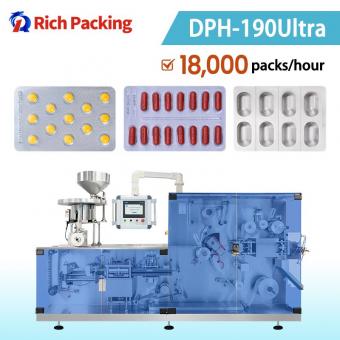
29+ years in pharmaceutical machinery, covering capsule filling, tablet pressing, blister packaging, tablet and capsule counting, cartoning, GMP production, and overseas machine service.

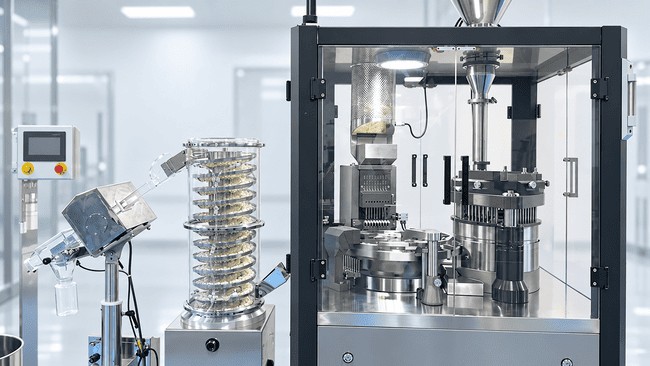
Pianificare una linea di produzione completa per il riempimento di capsule comporta molto più della scelta di una singola macchina. L'intera linea di produzione è costruita attorno alla macchina riempitrice di capsule come suo componente centrale. Un sistema pratico dovrebbe alimentare il materiale in modo costante, separare e riempire le capsule vuote con precisione, chiuderle in modo affidabile, pulire e ispezionare le capsule finite e quindi spostarle verso il processo di confezionamento richiesto.
Nella maggior parte dei progetti, le attrezzature che lavorano più a stretto contatto con la riempitrice includono un caricatore di capsule vuote, un alimentatore a vuoto, una macchina lucidatrice e selezionatrice di capsule e, quando i requisiti di controllo qualità lo richiedono, un metal detector. Possono essere aggiunte anche attrezzature a monte come miscelatori o granulatori e attrezzature a valle come confezionatrici blister o linee di conteggio e imbottigliamento, ma la loro necessità dipende dalla formulazione e dal formato di confezionamento finale.
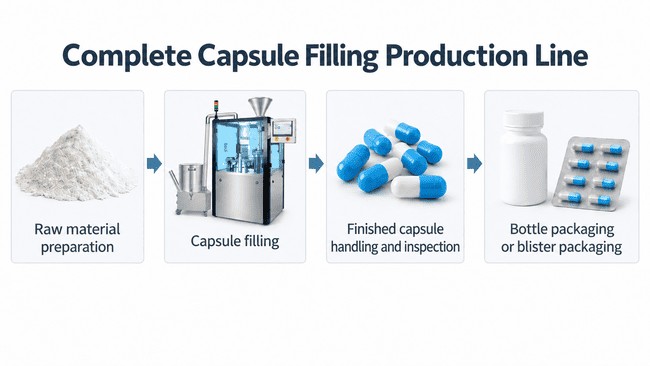
Una linea completa per capsule è un sistema di produzione coordinato piuttosto che un pacchetto fisso di macchine. Il processo inizia normalmente con polvere, granuli o pellet preparati, prosegue attraverso il riempimento delle capsule e la gestione post-riempimento, e termina con il formato di confezionamento selezionato. Alcune formulazioni possono richiedere miscelazione, granulazione o essiccazione prima del riempimento, mentre altre possono passare direttamente dal materiale preparato alla riempitrice di capsule.
Per la maggior parte delle linee automatiche, la sequenza di produzione chiave è: alimentazione capsule vuote + alimentazione materiale di riempimento → riempimento capsule → lucidatura e selezione capsule → rilevamento metalli opzionale → confezionamento finale. La preparazione del materiale a monte può essere aggiunta quando la formulazione lo richiede.
|
Fase del processo |
Attrezzatura principale |
Ruolo nella linea |
Quando necessaria |
|
Preparazione della materia prima |
Miscelatore / granulatore / essiccatore |
Preparare la formulazione e migliorare l'uniformità o la scorrevolezza quando richiesto. |
Opzionale — dipende dalla formulazione |
|
Alimentazione capsule vuote |
Caricatore di capsule vuote |
Trasferire le capsule rigide vuote alla tramoggia della riempitrice e mantenere un'alimentazione stabile di capsule. |
Consigliato per la produzione automatica |
|
Alimentazione materiale di riempimento |
Alimentatore a vuoto |
Trasferire polvere o granuli alla tramoggia del materiale e aiutare a mantenere un'alimentazione costante. |
Consigliato per la produzione automatica |
|
Riempimento capsule |
Macchina riempitrice di capsule |
Orientare e separare le capsule vuote, dosare il materiale, chiudere le capsule e scaricare il prodotto finito. |
Attrezzatura principale |
|
Pulizia post-riempimento |
Lucidatrice e selezionatrice di capsule |
Rimuovere la polvere residua e scartare le capsule anomale prima del confezionamento. |
Fortemente consigliato |
|
Controllo qualità |
Metal detector |
Aggiungere un punto di controllo a valle per la contaminazione metallica quando richiesto. |
Opzionale |
|
Confezionamento in flaconi |
Linea di conteggio e imbottigliamento |
Conteggio delle capsule nei flaconi, seguito da tappatura, sigillatura ed etichettatura. |
Opzionale — dipende dalla confezione finale |
|
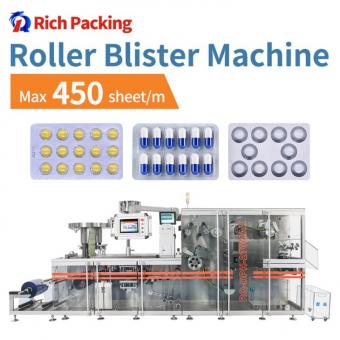
Confezionamento in blister |
Confezionatrice per blister |
Confezionamento delle capsule in alveoli blister singoli per una presentazione monodose. |
Opzionale — dipende dalla confezione finale |
La sequenza principale è: alimentazione capsule vuote + alimentazione materiale di riempimento → riempimento → lucidatura/selezione → ispezione opzionale → confezionamento finale; la preparazione a monte e il confezionamento a valle variano in base al prodotto.
La capsulatrice determina la capacità produttiva di base, la costanza di riempimento e il livello di automazione della linea. Una macchina affidabile deve eseguire diverse operazioni in modo continuo e nella sequenza corretta: orientare le capsule vuote, separare i tappi dai corpi, dosare il materiale di riempimento, chiudere le capsule e scaricare i prodotti finiti per la gestione a valle.
Per la produzione farmaceutica e nutraceutica commerciale, la scelta di una capsulatrice non dovrebbe basarsi solo sulla velocità massima. Il funzionamento stabile, la costanza di dosaggio, l'affidabilità della separazione delle capsule, la praticità nel cambio formato, la facilità di pulizia e la progettazione orientata alla conformità sono altrettanto importanti, poiché questi fattori influiscono direttamente sulla produzione giornaliera effettiva e sulle prestazioni della linea a lungo termine.
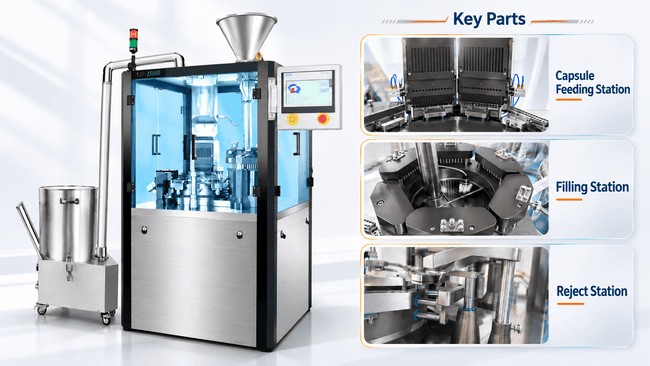 Capsulatrice automatica e le sue principali stazioni di lavoro.
Le capsule vuote vengono prima alimentate e orientate nella macchina. Il tappo e il corpo vengono quindi separati, dopodiché il sistema di dosaggio riempie il corpo della capsula con la quantità richiesta di materiale. Il tappo viene ricongiunto al corpo, la capsula viene bloccata e la capsula finita viene scaricata per la lucidatura, l'ispezione o il confezionamento.
Il materiale di riempimento più comune è la polvere, ma a seconda della macchina e del sistema di dosaggio, le capsule possono essere riempite anche con granuli, pellet e alcuni prodotti combinati. La configurazione di dosaggio corretta dovrebbe quindi essere selezionata in base alla formulazione effettiva piuttosto che alla sola dimensione della capsula.
Le incapsulatrici automatiche per capsule rigide possono solitamente essere configurate per le comuni dimensioni delle capsule dalla #000 alla #5, a seconda del modello di capsulatrice e dell'attrezzatura. Quando si cambia la dimensione della capsula, è necessario sostituire e regolare anche gli stampi e le parti di ricambio pertinenti.
Le proprietà del materiale sono importanti quanto la dimensione della capsula. La scorrevolezza, la densità apparente, la dimensione delle particelle e la tendenza alla segregazione influenzano la stabilità del dosaggio. Se una polvere scorre male, la soluzione potrebbe richiedere una modifica della formulazione, un trattamento a monte o una configurazione di dosaggio diversa, piuttosto che limitarsi a far funzionare la riempitrice a una velocità inferiore.
Il materiale dell'involucro della capsula deve essere confermato anche durante la selezione e la configurazione di una capsulatrice. Le capsule di gelatina e le capsule a base vegetale come le capsule HPMC possono comportarsi in modo diverso durante la separazione tappo-corpo, quindi il sistema a vuoto potrebbe richiedere diverse impostazioni di pressione negativa in base al materiale della capsula, alla qualità dell'involucro e alle condizioni operative effettive. Se la capsula ha una dimensione non standard o dimensioni speciali, il progetto non richiede necessariamente una macchina diversa: stampi di riempimento e parti di ricambio personalizzati possono essere progettati a partire da campioni o disegni confermati.
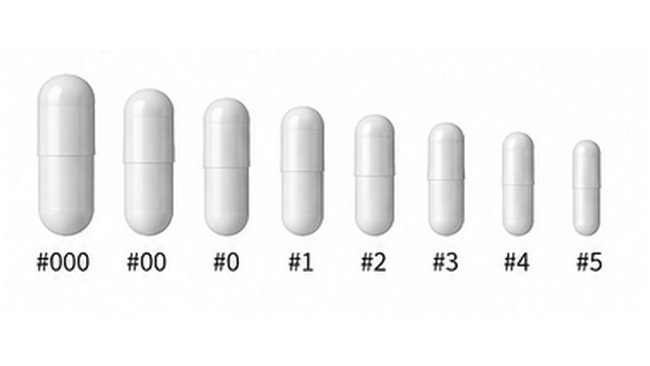 Dimensioni comuni delle capsule rigide. La compatibilità effettiva dipende dal modello della macchina e dall'attrezzatura.
La capacità produttiva dovrebbe essere uno dei primi fattori da determinare. La serie di incapsulatrici automatiche NJP di Rich Packing spazia dalla NJP-200C alla NJP-7600D. Nel nome del modello, il numero rappresenta il numero nominale di capsule che la macchina può completare al minuto in condizioni di test a vuoto / senza polvere. La produzione effettiva dipende dalla qualità della capsula, dal materiale di riempimento, dalle impostazioni di dosaggio e dalle condizioni operative. I progetti con una produzione inferiore possono anche utilizzare apparecchiature di riempimento semiautomatiche, ma la capacità da sola non dovrebbe essere l'unico fattore nel confrontare macchine semiautomatiche e completamente automatiche.
Nella produzione reale, la produzione utilizzabile dipende da qualcosa di più della velocità nominale. La qualità della capsula, il flusso del materiale, la stabilità del dosaggio, la configurazione dell'operatore e l'abbinamento delle macchine a valle influenzano l'efficienza della linea. Una macchina idonea dovrebbe raggiungere la produzione target con una separazione e chiusura stabili delle capsule, peso di riempimento costante e un basso tasso di scarto.
Le incapsulatrici semiautomatiche sono adatte per lotti più piccoli, produzione pilota e progetti con un investimento iniziale inferiore. Richiedono una maggiore partecipazione dell'operatore durante il caricamento, il riempimento e la chiusura delle capsule, e i requisiti di personale possono essere più elevati a seconda del flusso di lavoro di produzione.
Le macchine completamente automatiche non sono semplicemente un'opzione a velocità più elevata. Rich Packing offre anche modelli NJP a velocità inferiore come NJP-200C e NJP-400C, quindi il loro vantaggio può essere chiaro anche quando la capacità target si sovrappone a un modello semiautomatico. Il funzionamento automatico riduce l'intervento manuale continuo e l'onere della formazione dell'operatore, aiuta a ridurre i requisiti di manodopera, fornisce un controllo del ciclo più coerente ed è più facile da integrare con un alimentatore a vuoto, una lucidatrice e selezionatrice di capsule, un metal detector e apparecchiature di confezionamento a valle. Il suo design chiuso, standardizzato e più facile da pulire è anche più adatto per le fabbriche farmaceutiche che lavorano verso i requisiti di produzione cGMP. Per le fabbriche che prevedono una crescita futura, una linea completamente automatica offre più spazio per operazioni standardizzate e una successiva integrazione della linea.
La riempitrice di capsule può funzionare da sola, ma diverse macchine ausiliarie vengono comunemente abbinate ad essa per rendere la produzione più pulita, più stabile e più facile da automatizzare. Per i progetti automatici, il caricatore di capsule vuote e l'alimentatore a vuoto gestiscono due diverse attività di alimentazione: uno fornisce i gusci delle capsule vuote, mentre l'altro trasferisce polvere o granuli. Dopo il riempimento, una lucidatrice e selezionatrice di capsule e un metal detector opzionale supportano la pulizia a valle e il controllo qualità.
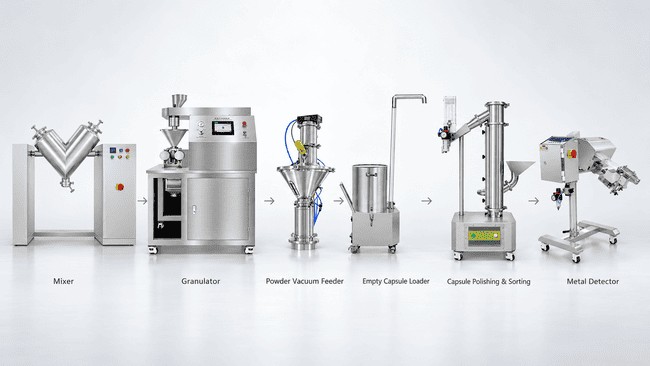 Esempi di macchine ausiliarie utilizzate attorno a una riempitrice automatica di capsule.
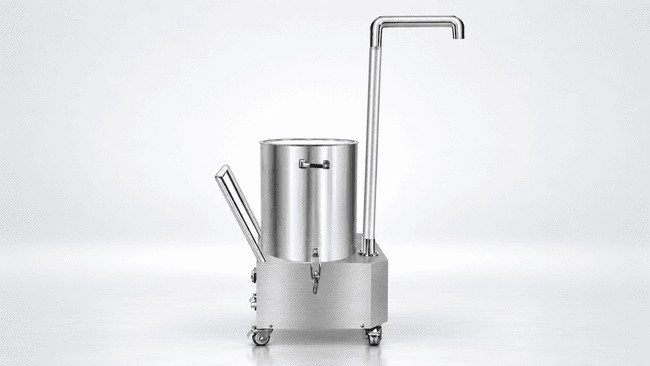
Un caricatore di capsule vuote trasferisce automaticamente le capsule rigide vuote nella tramoggia della riempitrice. Riduce il caricamento manuale ripetuto e aiuta a mantenere un'alimentazione stabile delle capsule durante la produzione continua.
Per le linee automatiche ad alta velocità, l'alimentazione automatica delle capsule può ridurre l'intervento dell'operatore e migliorare la continuità produttiva. Il caricatore deve essere abbinato alla dimensione della capsula, al materiale del guscio e alla velocità di produzione richiesta. Serve a uno scopo diverso dall'alimentatore a vuoto, che gestisce il materiale di riempimento anziché i gusci delle capsule vuote.
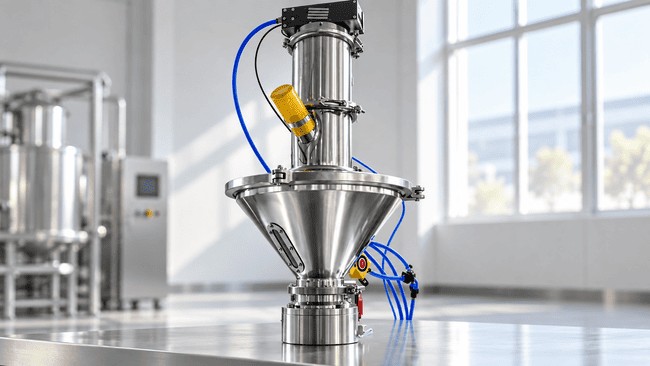
Un alimentatore a vuoto trasferisce automaticamente polvere o granuli da un contenitore di materiale alla tramoggia della riempitrice di capsule. È particolarmente utile sulle linee automatiche perché riduce il caricamento manuale ripetuto, limita l'esposizione alle polveri e aiuta a mantenere un livello di materiale più stabile nella tramoggia.
Un alimentatore a vuoto non è obbligatorio per ogni riempitrice di capsule, ma diventa sempre più utile man mano che aumentano la capacità produttiva e il livello di automazione. Per la produzione continua, è una delle macchine di supporto più pratiche da considerare.
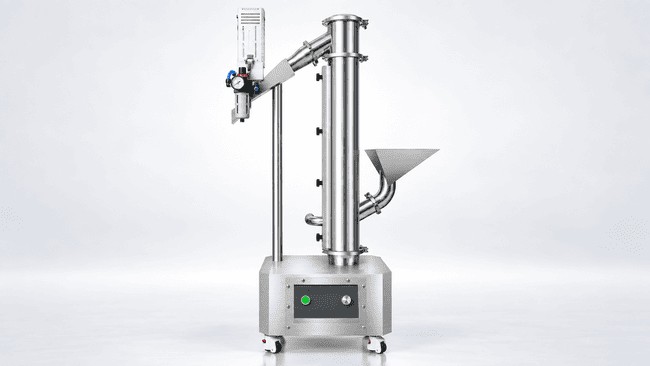
Dopo il riempimento, della polvere fine può rimanere all'esterno delle capsule. Una lucidatrice per capsule rimuove questo residuo e migliora la pulizia e l'aspetto del prodotto finito prima dell'ispezione o del confezionamento.
Una funzione di selezione può rimuovere ulteriormente capsule vuote, rotte, allentate, danneggiate o altrimenti anomale, a seconda del design dell'attrezzatura. Poiché la lucidatura e la selezione avvengono immediatamente dopo il riempimento, questa macchina è uno dei partner a valle più direttamente utili per una riempitrice automatica di capsule e può essere collegata in linea per la produzione continua.
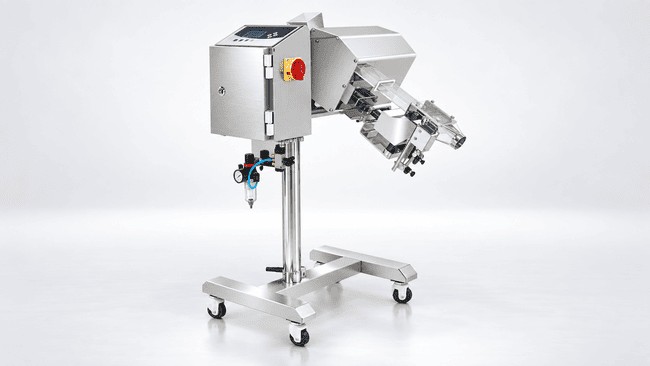
Un metal detector non è un componente richiesto di ogni linea di riempimento capsule e non fa parte del processo di riempimento stesso. Tuttavia, può essere un importante punto di controllo qualità a valle, in particolare quando il produttore, il cliente o il mercato di riferimento richiedono un controllo aggiuntivo sulla contaminazione metallica.
Il rilevatore viene solitamente posizionato dopo la lucidatura o l'ispezione delle capsule e prima del confezionamento finale. A seconda del modello e delle condizioni del prodotto, può essere utilizzato per rilevare contaminazioni ferrose, non ferrose e in acciaio inossidabile nelle capsule finite. Se debba essere incluso dipende dal sistema di qualità, dalla valutazione del rischio e dai requisiti di mercato della fabbrica, quindi è meglio trattarlo come una configurazione opzionale ma consigliata piuttosto che come una necessità universale.
Altre macchine possono essere aggiunte quando il prodotto o la confezione finale lo richiedono, ma non devono dominare la configurazione della linea di capsule. Prima del riempimento, un miscelatore può essere utilizzato per migliorare l'uniformità degli ingredienti, mentre la granulazione e l'essiccazione possono essere necessarie per formulazioni con scarsa scorrevolezza o problemi di segregazione. Molti prodotti, tuttavia, possono essere riempiti dopo un'adeguata setacciatura e miscelazione senza granulazione.
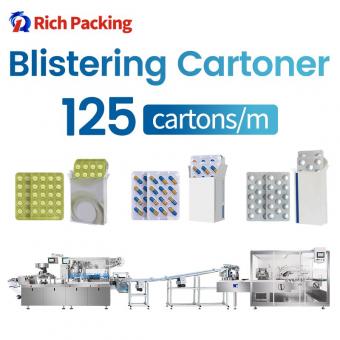
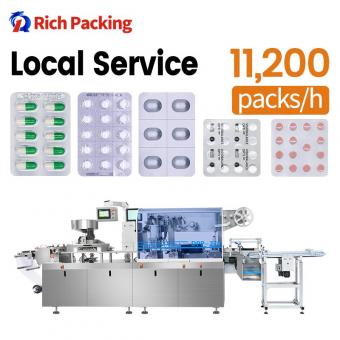
Dopo la lucidatura e l'ispezione, le capsule finite possono passare al confezionamento in flaconi o in blister. I progetti per flaconi possono utilizzare una contatrice seguita da tappatura, sigillatura ed etichettatura, mentre i prodotti monodose possono essere confezionati su una confezionatrice blister. Questi sistemi a valle dovrebbero essere selezionati in base alla confezione finale piuttosto che trattati come parti obbligatorie di ogni linea di riempimento capsule.
Per molti progetti automatici, una configurazione di base pratica è: caricatore di capsule vuote + alimentatore a vuoto → riempitrice automatica di capsule → lucidatrice e selezionatrice di capsule → metal detector opzionale. I due dispositivi di alimentazione servono ingressi separati: il caricatore di capsule vuote fornisce i gusci delle capsule, mentre l'alimentatore a vuoto fornisce polvere o granuli. Insieme alle apparecchiature a valle, questa configurazione supporta un'alimentazione, un riempimento, una pulizia e un controllo qualità stabili.
Le apparecchiature di miscelazione o granulazione possono quindi essere aggiunte a monte solo quando la formulazione lo richiede, mentre il conteggio e l'imbottigliamento o il confezionamento in blister possono essere aggiunti a valle in base alla confezione finale. Questo approccio modulare evita apparecchiature non necessarie mantenendo la linea facile da espandere man mano che la produzione cresce.
La riempitrice di capsule dovrebbe essere il punto di partenza quando si progetta una linea completa di produzione di capsule. Una volta selezionato il modello corretto in base alla dimensione della capsula, al materiale del guscio, alla formulazione e alla produzione, le macchine di supporto più utili possono essere aggiunte attorno ad essa. Per la produzione automatica, un caricatore di capsule vuote, un alimentatore a vuoto e una macchina per lucidatura/selezione delle capsule sono scelte ausiliarie comuni, mentre un metal detector può fornire un punto di controllo qualità aggiuntivo quando richiesto.
Miscelatori, granulatore, confezionatrici blister e sistemi di conteggio e imbottigliamento svolgono ancora ruoli importanti, ma dovrebbero essere configurati solo quando il processo del prodotto o il formato di confezionamento finale lo richiedono. Una linea ben assortita non è quella con il maggior numero di macchine, ma quella in cui ogni macchina risolve una reale esigenza produttiva.
Non sempre. Le capsule vuote possono essere caricate manualmente, ma un caricatore automatico è utile per la produzione continua perché riduce la manipolazione ripetuta da parte dell'operatore e aiuta a mantenere rifornita la tramoggia delle capsule. È particolarmente pratico sulle linee automatiche ad alta velocità.
Non sempre. Una riempitrice di capsule può essere caricata manualmente, ma un alimentatore a vuoto è fortemente raccomandato per la produzione automatica ad alta resa perché riduce la manipolazione manuale e aiuta a mantenere un'alimentazione continua.
È estremamente utile per la produzione commerciale. Rimuove la polvere residua dalla superficie della capsula e può essere combinata con la selezione per rimuovere le capsule anomale prima del confezionamento.
Non tutte le linee ne richiedono uno. Un metal detector è un dispositivo opzionale di controllo qualità a valle che può essere aggiunto quando la fabbrica, il cliente o il mercato richiedono un ulteriore controllo della contaminazione metallica.
Dipende dalla formulazione. La miscelazione viene utilizzata quando gli ingredienti necessitano di una miscelazione uniforme, mentre la granulazione viene generalmente presa in considerazione quando la scorrevolezza o la segregazione rendono difficile il riempimento diretto.
Entrambi sono comuni. Il confezionamento in flacone è adatto per grandi quantità, mentre il confezionamento in blister è utile per la presentazione in dose unitaria e la protezione della singola cavità. Il mercato finale e i requisiti del prodotto dovrebbero determinare la scelta.

29+ years in pharmaceutical machinery, covering capsule filling, tablet pressing, blister packaging, tablet and capsule counting, cartoning, GMP production, and overseas machine service.

E-mail : manager@richpacking.cn
Building D, No. 226, Beishan Qiaotou Street, Haizhu District, Guangzhou City, Guangdong Province, China


 Rete IPv6 supportata